

 This question can stir up a big argument about the value of the pitching arm but there is only one answer. The pitching arm does not generate the velocity. It only guides the pitch. Therefore the pitching arm must follow the body and does not come into play until the body has done its job.
The problem is most pitching coaches and programs teach the opposite. They use extreme throwing approaches to over emphasize the arm and it work in the pitching delivery which is not backed by the science.
In this article, I will breakdown a study proving the pitching arm does not work to push force on the ball and I will talk about the best way to train the body to generate velocity without using the arm.
Science Proves Pitching Arm Does NOT Generate Velocity
This was the conclusion of a study performed by the famous Dr. Jobe back in the 1980's. Here is the actual result from the case study:
Acceleration (Stage III) had a lack of muscle activity, even though the arm was accelerating forward in space.
I have been in many arguments about this issue. I have listened to coaches tell their pitchers that if they want to throw harder they need to speed up their arms. My question is how will speeding up your arm increase your velocity? This doesn't make much sense because if you arm leads your body, it must leave the body behind. If you leave the body behind then it is up to the small muscles of the arm to take the entire workload of generating 90+ mph.
To prove my answer to the question above we must once again look at the little pitchers in the game. This is because these guys must work a lot harder to generate 90+ mph. I go once again to my favorite little man Tim Lincecum; 5'7 165 lbs. Notice the picture here of him at front foot strike. Now, where is his arm? It is hiding behind his body. YES, all you coaches out there who are coaching your pitchers to speed up there arms, it is behind his body. This means his body is driving the pitch. This means his body is generating the velocity. This means the arm is along for the ride.
Pitching Velocity Training That Doesn't Use the Arm
 The coaches who will argue my point here are the coaches who use giant pitchers like Randy Johnson as their example of pitchers who have a lot of arm action. This is true but these pitchers have more leverage on the ball than the average man. If you are 6'8 like Randy Johnson then congratulations you are in a small percentage of baseball players but if you are 6'2 and under, take it easy on your arm and learn to work your body as a single unit in your delivery. When you work on generating velocity, work on pulling it from your legs and core and not your arm.
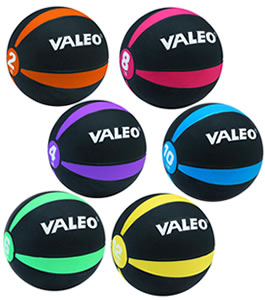
I recommend using medicine balls as often as you can. I have many throwing drills with these balls that force the pitcher to use every muscle they have to make the throw. This is how we must pitch if we want to generate 90+ mph without destroying our arm.
If you want to learn how to pitch with your body as a single unit then check out the 3X Pitching Velocity program.
Training Program that Trains the Entire Body NOT Just Arm
 This program has helped tons of pitchers live the dream of throwing 90+mph and signing with a D1 University, getting drafted by a Major League Organization and making it back to Major League Baseball. Many scouts in all organizations of baseball have recommended this program to help young pitchers get to the 90+mph range to improve their value at the next level.
The reason the 3X Extreme Pitching Velocity Program works is because it is based off of science and it has been proven to develop the 90+mph fastball on thousands of pitchers. It isn't rocket science or voodoo, it is the real deal! The program comes with a high level workload of drills, lifts and exercises scientifically programmed to enhance throwing speed on the mound while developing an efficient pitching delivery. The format of the 3X Pitching Velocity Program is similar to the same approach Olympic throwers have been using for decades to increase throwing velocity. This approach isn't new to the sports world but it is new to baseball.
If you are serious about your career and are insanely driven to put yourself into an extremely small percentage of pitchers who are potential D1 prospects, top level draft picks or you just want to reach your potential on the mound then this program is the best chance you have to making your dreams come true.
Learn more about the 3X Extreme Pitching Velocity Program or get started TODAY adding 5-10+mph!

The fact that a player can achieve 50% of their velocity (in studies) by isolating the throw to the shoulders-fingertips indicates that the arm is capable of producing a very significant amount of force.
Granted, the body obviously contributes a huge amount to velocity as well, but once the shoulder reaches maximum internal rotation (that is, right before the shoulder begins to externally rotate), there is, IN ADDITION to the energy that is flowing up the kinetic chain from the hips and core, an active effort by the thrower to use the arm to assist the throw.
Every piece of the kinetic chain actively contributes to velocity. The arm happens to be the last piece of the chain, but it is not the case (and this is in fact extremely intuitive when you think about it) that the musculature, the internal rotators of the arm are not firing just as hard as every other piece in the kinetic chain. They just happen to have the job of not only independendtly generating force, but also HARNESSING all the energy that has been transferred to it by the hips and core.
I think the mindset that this article evokes may be a good one. Many players dont get enough out of the first part of the kinetic chain and solely rely on the last piece. However, it's innacurate to say that the arm literally is along for the ride, even if this is a useless cue for many many players out there.
Lanky
Yes, you are correct but most athletes can not cognitively develop your perspective on throwing/ pitching. Therefore teaching throwing mechanics without bringing a lot of emphasis to the arm is very effective when initially learning throwing mechanics. Thanks for the comment!
I also wondered how Brent could explain that a pitcher can throw at least 80% of their maximum velocity from their knees. Not much contribution from the body there. Tom House uses this to see if a pitcher has some hidden velocity in their legs or their arms. If Lincecum’s shoulders are still loaded at foot strike, then how could the body possibly be contributing to the velocity?
This live case study will show you exactly how!
https://www.youtube.com/watch?v=PDQuP0vffPM
what I meant to say was useful* cue
You've got an interesting and thought provoking site…I like the info very much for the most part. Consider learning as much as you can about SETPRO which will certainly help you clarify and refine many of your ideas/principles.
A major weakness that I've noticed in some of your articles is the HOW. How do you teach a player to get separation, etc. Sure, now they know that this is crucial for velocity, but how do you generate this torque in the core? Setpro offers a motor learning perspective that is very interesting/helpful although sometimes the answer is frustrating: through trial and error.
anyway check it out.
Lanky
Lankylefty thanks for the comments. I will look more into setpro. To answer your question how do you train separation I would suggest you read this article http://topvelocity.net/triple-extension-creates-o…
You have to look at the throwing motion of the body as the same as you do a drag car. The BODY is the ENGINE, the SHOULDER is TRANSMISSION and the ARM is the DRIVE LINE and the Hand or figures are the tires. The BODY the legs, core, and chest generate the torque. The SHOULDER is the horse power or acceleration.The ARM transfers the the torque and horse power to the HAND. The HAND puts the power of the BODY and the acceleration of the SHOULDER on to the Hang which controls where the ball goes. If everything is in line then the motion is powerful and effortless. If the motion of the mechanics is flawed then the line of power is broken and is a percentage of power is lost and injury in inevitable.
Joe, great analogy! This takes my article here and brings it to the next level. The intentions of my article above is to educate the beginner and the pitcher or coach who is still using conventional wisdom, which believes that arm strength determines velocity, as their basic foundation to pitching mechanics.
Lanky Lefty,
Pitching using the whole body from the ground up as Brent emphasizes is a side ways body movement to front foot touch down with a stride length of at least matching one's body height with no body rotation until front foot touch down, a highly experienced and knowledgeable baseball person I know of teaches that lower body rotation is executed at the split second before front foot touch down and the upper torso, shoulders are still closed, aimed at the intended target and then follow with their rotation immediately after hip rotation which creates lower body and upper torso, shoulder separation at that point in the forward movement, to answer your question if after reading Brent's article you are still not sure I suggest you get into pitching position then stay sideways and stride now hold that sideways position and rotate your hips only leaving your upper torso and shoulders closed, aimed straight down the line at your target, now you are in a lower body, hips and upper torso, shoulders separation position. As during tee hitting you would approach the ball in a straight sideways movement and then just rotate your hips leaving your upper torso, shoulders closed still aimed straight down the line which at this point in the movement you would be in a lower body, hips, upper torso, shoulders body separation also.
In Joes very nice break down I would have liked for him to have mentioned the hips in there because the hips are highly instrumental during playing all phases of the game.
Here is something that may bring on a considerable number of disagreer's which is the comment heard very often by pitchers during games when they become somewhat erratic which is don't aim the ball, there are two words here , "AIM" and "GUIDE" and in my opinion the positive word to use is "AIM" as in aiming the rifle barrel straight at your target, aim your arm straight at your target, I feel that when a pitcher tightens up, chokes the ball underneath with the thumb etc. he attempts to guide and lose control of the ball.
Lets not forget that the arm and hand are the last pieces of body movement involved in delivering the ball to its final destination and also that an enormous amount of energy has been generated or should have been generated by the body in the process and that the arm has to continue to furnish the great amount of energy built up by the body so let's remember that body momentum and arm speed out of the glove are vitally important during the arms final throwing movement.
The above comments and opinions have brought up some excellent points to talk about.
Don Ervin
kom_ervin@yahoo.com
I think the key here is that the kinetic energy is 1/2mv^2. Even though there is only 20% more velocity when adding legs, there is 44% more energy you need to provide.
Great stuff Li!